What Does “Far-Right” Really Mean?
Drawing the line between conservative values and far-right extremism.

The term “far-right” is thrown around a lot, but few people agree on exactly what it means. That’s a problem, because if we can’t clearly define it, we can’t recognise when our politics begins to cross that line.
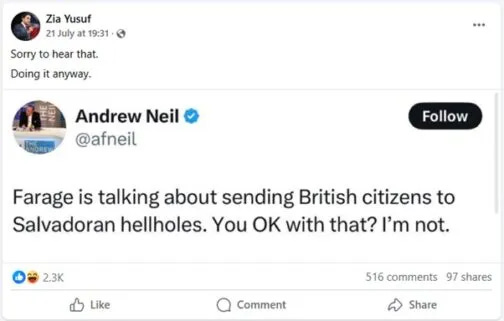
Right-wing politics is familiar territory in Britain. It covers people and ideas most of us recognise - from traditional Conservatives like Sir John Major, Philip Hammond, Ken Clarke, and Dominic Grieve, to journalists such as Andrew Neil or Max Hastings. These figures are certainly right-wing, but few would describe them as “far-right.”
Why not? Because they set limits on how far they’re willing to go. They’ve consistently defended democratic norms, human rights, and the basic institutions that hold the UK together.
Drawing the line: what the mainstream right rejects
Major, Hammond, Clarke, Grieve and others have all criticised their party’s recent drift toward extremism.
John Major warned that the NHS was “as safe with them as a pet hamster with a hungry python,” rejecting privatisation or charging for care.
Philip Hammond said the Conservatives had been “taken over by unelected advisers and usurpers” turning it into “an extreme right-wing faction.”
Ken Clarke cautioned that the UK was “dangerously close to an elected dictatorship.”
Dominic Grieve argued that leaving the European Convention on Human Rights would threaten peace in Northern Ireland and damage Britain’s global reputation.
Max Hastings, long-time Conservative commentator, lamented that “the [extreme] right is now running Britain - and it’s a terrifying sight.”
In short: moderate conservatives believe in limits. They see attacks on human rights, democratic safeguards, or the NHS as going too far.
So what does “far-right” actually mean?
We don’t need to reserve the term solely for literal Nazis. Between mainstream conservatism and outright fascism lies a wide and dangerous space, and we need language to describe it.
A reasonable definition is this:
Far-right describes any party or individual who seeks to weaken or destroy vital public services (like healthcare or education), undermine human rights laws, or erode democratic safeguards - such as free elections, judicial independence, or the rule of law.
This definition reflects the point where moderate right-wingers themselves say: “That’s too extreme.”
Why it matters now
By this standard, Reform UK - Nigel Farage’s party - fits the description of a far-right movement.
Farage has praised Donald Trump’s Project 2025, which calls for mass deregulation, politicisation of the civil service, and attacks on environmental protections. His own UK rhetoric mirrors this agenda, including:
replacing the NHS with an insurance-based system;
gutting human rights and equality laws;
undermining judicial independence;
cutting taxes for the wealthy while slashing welfare;
abandoning climate action; and
creating a Cabinet of unelected appointees chosen by private backers.
That last point is especially dangerous. A government run by unelected figures, accountable only to a party’s “owners”, is not democratic.
The stakes
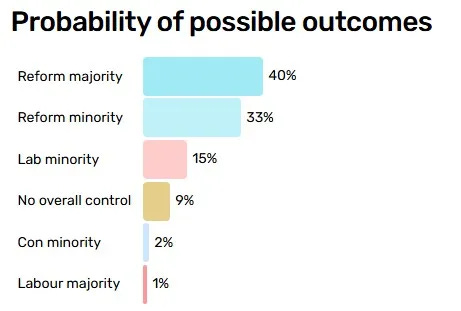
Polling data suggests that Reform UK could win significant influence in the next general election - possibly even shaping the next government. Yet much of the UK media continues to platform Farage without naming what his movement is: far-right.
If we fail to call that out now, we risk normalising ideas that threaten democracy itself.
Conclusion
The “far-right” isn’t only limited to the extremists of the past.. It’s any political force that undermines democracy, equality, and public institutions - the very foundations of a fair society.
If we can’t name it, we can’t stop it. And unless we do, Britain could soon find itself governed by it.
This article is adapted from an original piece by Mark E. Thomas (August 2025), author of ‘99%: Mass Impoverishment and How We Can End It’. If you’re interested in reading the original piece you can find it here: https://99-percent.org/what-is-far-right/
To learn more—and to join a movement working peacefully to end mass impoverishment—visit the 99% Organisation.